QUESTION EVERYTHING
Never have we had so much information at our fingertips, with the tools available for sorting it. It truly is a boon for the truth seeker, and for the learner of any topic.
AI used correctly is simply turbo-charging research and the filtering of information, allowing truth to be unveiled. For the history, science, physics and religion buffs, the ability to review and learn a topic is next level to anything that has been possible before.
Morals Mark is my research, written in memo format, using AI to compile the work. Here is an example.
Genesis 16:12 — the man of the open country
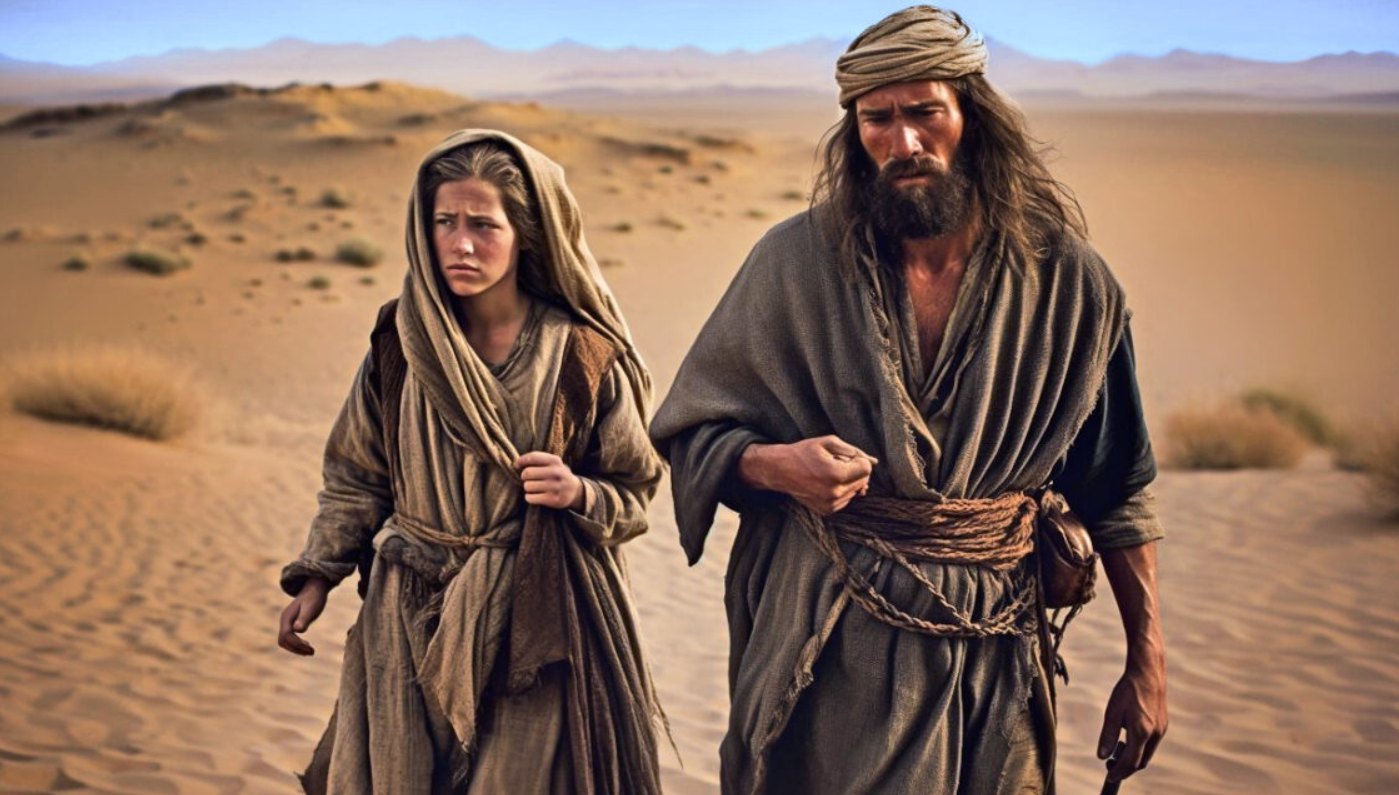
The Man of the Open Country: Genesis 16:12 — Ishmael, Forefather of Islam
The memo deals with a verse describing the descendants of Ishmael, who are the Arabs — a verse copied and re-copied for centuries, and read for most of them in a way the oldest texts do not support.
From the abstract:
Genesis 16:12 has been translated for centuries as a prophecy that Ishmael would be “a wild ass of a man” living “in hostility toward all his brothers.” The oldest texts do not say this. The oldest translation in existence — the Greek made by Jewish scholars in Alexandria in the third century BCE — calls him agroikos anthrōpos: a man of the open country. No animal, no hostility. The hostile readings are datable: the first hard hostility word appears in Latin around 400 CE, and “in hostility toward” has no ancient counterpart at all. This memo lays the verse out word by word in Hebrew, Greek and Latin; reads it against the Bible’s own usage; does the same for the words used of Hagar, the Egyptian mother; and then documents, in date order, how the meaning was changed.
The same method was then turned on Hagar, Ishmael’s mother. The finding there is that no early layer of the text calls her a slave in its own vocabulary. The Hebrew words used of her are shifchah and amah; the Greek is paidiskē; and at Genesis 16:3 she is given to Abraham l’ishah — as a wife. Her unfreedom is in the narrative facts, not the words. “Slave-girl” is the harshest rendering of her and also the most modern one — the same late-hardening pattern as the donkey and the hostility.
Alongside that sits an old Jewish tradition, in Genesis Rabbah and carried by Rashi, that Hagar was a daughter of the reigning Pharaoh — a princess given to Abraham’s house. Some Islamic accounts say the same. The memo presents that as tradition rather than record, and keeps the two registers apart, because the argument only holds if the line between what the text says and what the traditions say is never blurred. It is the more interesting reading, and it is not the same kind of claim as the word evidence.
The memo also carries a verification register listing every item in it reported from secondary knowledge rather than checked against a primary edition. That register is the point. A method that cannot show you its own soft spots is not a method.
Why this matters beyond one verse
Having AI to reach the ancient sources that are available — and to go back to basics with them — gives the researcher real power to review the interpretation of history. Put the Hebrew, the Greek and the Latin side by side; read a verse against the Bible’s own usage of the same words elsewhere. Work that once took a scholar a career now takes a determined amateur a week — provided the amateur checks.
That proviso is the whole job. These tools will produce a confident, well-written, plausible answer whether or not it is true. They will agree with you if you push. The only defence is to make them show the source, and then go and look at the source yourself.
As the motto goes: Question Everything.
PS. For those wondering — I use Claude mainly, and cross-check the work using Gemini and Grok.