CANOLA IS FLOWERING
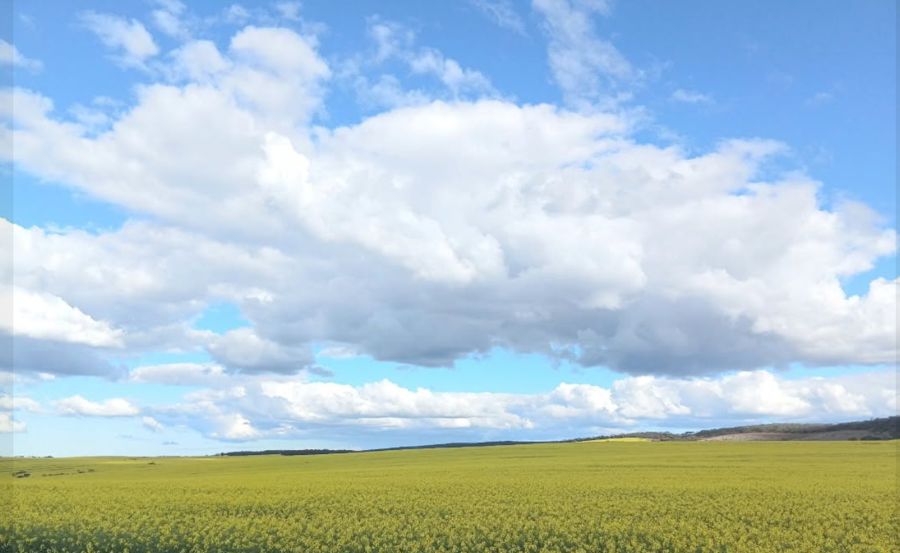
Canola is flowering in the West.
Driving across this country, the whole south is green with fresh growth. Australia has had a lot of rain for a desert nation — Lake Eyre is around 80 per cent full, which has not happened since 1974.
Canola oil is an alternative to diesel, and Australia grows a great deal of it. Most of it is shipped to Europe. Instead, this country could be replacing a serious share of its imported diesel with fuel grown here.
The arithmetic
Canola seed is roughly 40 to 45 per cent oil. One tonne of seed yields about 400 to 450 kilograms of oil, which converts to around 450 to 500 litres of biodiesel. A barrel is 159 litres, so a tonne of canola is worth roughly 2.8 to 3.1 barrels of diesel equivalent — biodiesel carries very similar energy content to petroleum diesel.
Run that across the national crop. On the 6.2 million tonne forecast for 2026–27, the biodiesel potential is about 17.4 to 19.2 million barrels of diesel equivalent a year. In a strong year of 7.5 million tonnes it is 21 to 23 million barrels.
To be straight about it: almost none of that happens today. Most Australian canola is exported as food oil or crushed here for meal and oil, and only a small portion goes anywhere near biodiesel. The point is not that we are doing this — it is that the crop is already in the ground, and the capacity to refine it into our own fuel is a decision, not a discovery.
Right now we have very few processing plants that crush the seed and prepare the oil. Micro and macro plants across the growing regions could be producing their own biodiesel, creating jobs and building self-sufficiency in the places that grow the crop.
Worth understanding: the new high-compression diesel engines are generally rated for only ten to twenty per cent biodiesel in the blend. The older diesels will run on the pure stuff. Rudolf Diesel’s original engine was demonstrated running on peanut oil.
For anyone looking for a new industry to get into, I think micro biodiesel plants are a real future in Australia. We should be fast-tracking their construction and processing the canola where it grows.